
Data & AI platform by Data Analytics
AI with your own data starts with business context
AI can only contribute meaningfully to your organisation when the data it uses has sufficient context. A sales amount, for example, says little without a period, customer, product and associated costs. Using AI with your own data therefore involves more than choosing a model: it starts with identifying the business information required. Data Analytics helps you organise that foundation and align applications with specific questions from your employees.
The examples on this page are hypothetical situations, not customer cases.



Meet our team

01
Choose sources based on the question
Do not start by collecting every available piece of data. First define which decision you want to support and who is responsible for it. Sales records and customer data may provide a sufficient starting point for understanding customer development. Questions about delivery reliability also require orders, promised delivery dates and actual deliveries. The question determines which sources are relevant.
ENABLE is the Data & AI platform from Data Analytics for connecting and structuring business data and making it available through controlled access. This provides a foundation for dashboards, analysis, and developing and sharing apps and AI. Data Analytics supports setup and management in line with your sources and intended use.
02
Assess quality before interpretation
Incomplete item codes, duplicate customers and inconsistent date fields can distort an analysis. Make missing data, source freshness and differences in definitions visible. Not every discrepancy needs to be resolved immediately. However, the limitations of an answer must be clear, along with the circumstances in which human review remains necessary.
Agree who owns important data and who can correct errors. A controller assesses different discrepancies from an employee working on the operational floor. Position checks close to the relevant business processes. The page on data quality and governance explains more about organising these responsibilities.
03
Give relationships and definitions meaning
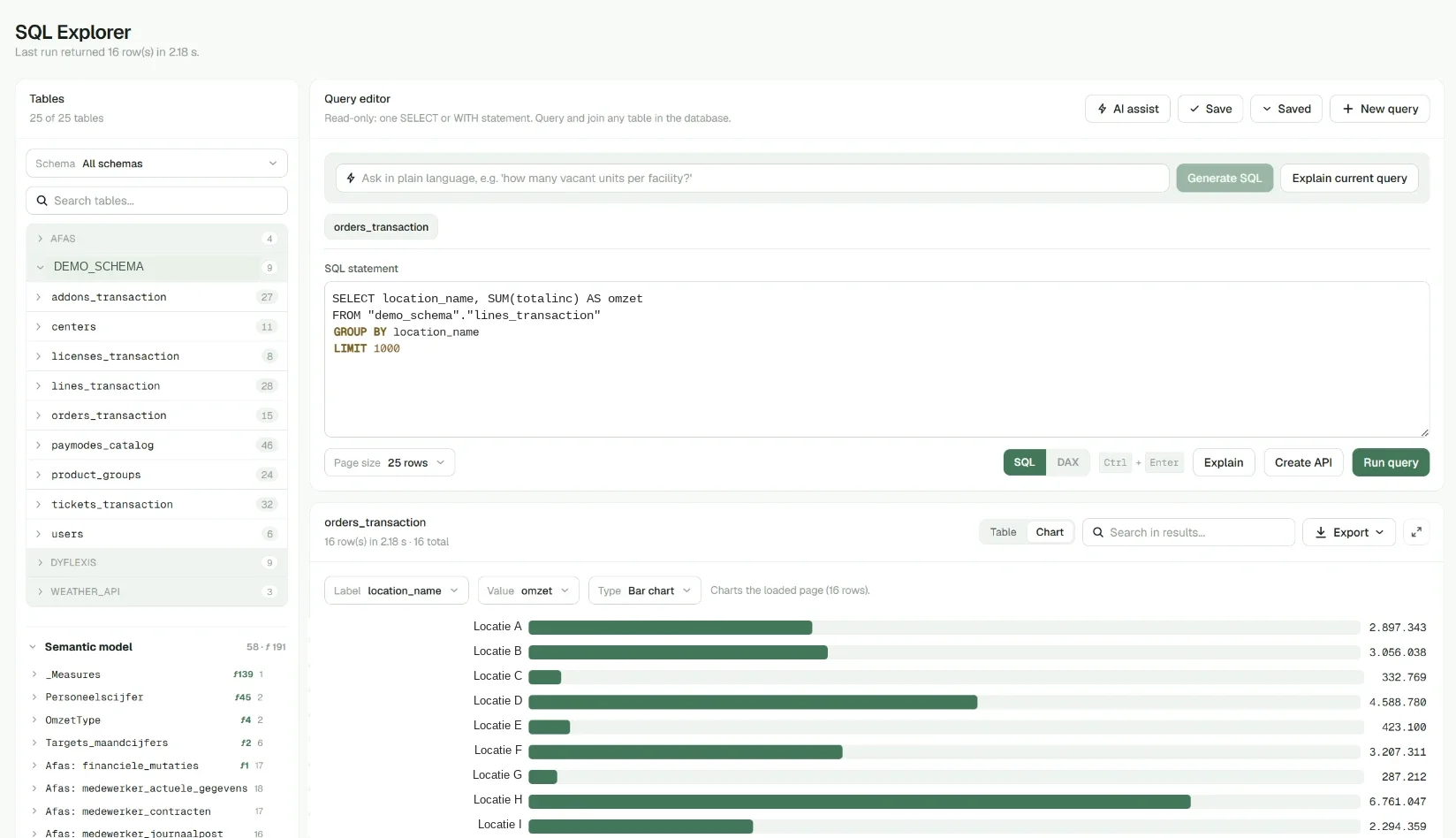
A useful data model describes how customers, transactions, products and periods relate to one another. This goes beyond technical connections. You also need to know whether amounts include VAT, which posting date applies and how returns are counted. These agreements help prevent different departments from interpreting the same question differently.
Example: a sales line may belong to one order, while that order has multiple deliveries. Combining those records without suitable relationships can cause amounts to be counted twice. First establish the level of detail at which an analysis operates. AI does not automatically correct an invalid relationship; its meaning must be established in the underlying information.
04
Distinguish revenue, margin, inventory and sales
Example: revenue from a product group increases, but discounts and purchasing costs rise more quickly. An answer about growth is therefore different from an answer about profitability. Define which costs your margin measure includes and compare periods using the same definition before drawing conclusions.
Inventory and sales also require different perspectives. Inventory is often a balance at a particular point in time, whereas sales represent movement over a period. Example: high inventory alongside limited recent sales may warrant investigation, but without lead times, seasonality and planned orders, it does not yet indicate which action is appropriate.
05
Move from a reliable foundation to an application
Next, choose how employees can best use the information: through a dashboard, an analysis, an app or a conversation with business data. Not every question requires generative AI. A fixed indicator may suit recurring management needs better, while an exploratory question may require explanation and further analysis.
Test an initial application using recognisable questions and outcomes checked in advance. Assess not only whether an answer sounds plausible, but also whether its source, period and definition are correct. Then expand selectively. For conversations with data, see chat with business data; for financial reporting, see the existing financial dashboard.
Frequently asked questions
Does all our data need to be perfect first?
No. Start with a clearly scoped question and assess the data it requires. Record known limitations and determine which errors must be resolved first. This prevents a broad improvement programme from unnecessarily delaying a useful initial application.
Can documents also form part of the information base?
That depends on the application and setup chosen. Determine which documents are relevant, who may access them and how freshness will be maintained. Document content and structured transaction data require different approaches to access and assessment.
Does data always remain within our own environment?
That cannot be assumed. Processing by an external model depends on the model and configuration. Discuss in advance which data will be submitted, where processing takes place and which agreements are required.
How does this differ from simply choosing an AI model?
Choosing a model does not determine what revenue means or which customer records belong together. AI with your own data also involves source selection, modelling, access and assessment. Those connections make answers easier to evaluate against your business practice.
Discuss your question with Data Analytics
Which sources, users and checks does your application need? Discuss your question in an ENABLE demo.
Meet our team