
Data & AI platform by Data Analytics
Ask questions of business data, with context and checks
‘Why did our margin fall last month?’ sounds straightforward, but requires more than a language model. You need suitable data, an agreed margin definition and sufficient comparison context. Chat with business data is therefore a way of working that needs careful setup, not evidence that every question can already be answered. ENABLE, the Data & AI platform from Data Analytics, connects and structures reliable data for controlled dashboards, analysis, and developing and sharing apps and AI.
The examples on this page are hypothetical situations, not customer cases.



Meet our team
01
Frame questions that make analysis possible
A focused question names the subject, period and comparison. For example, ask which product groups had a lower gross margin last quarter than in the same quarter last year. This clarifies what needs to be calculated. A broad question such as ‘how are we doing?’ leaves too much room for different interpretations.
Example: you ask which customers pay later than their agreed terms. This requires invoice dates, due dates, payments and customer agreements. If you also want to know why, additional records may be needed. A calculated payment pattern does not automatically provide a supported explanation for a customer's behaviour.
02
Make sure data and business context align
A language model does not automatically know your internal conventions. Terms such as net revenue, open order and active employee must align with your records. Exceptions matter too: does a cancelled order still count, and when do you consider an invoice paid? Document these choices before using answers widely.
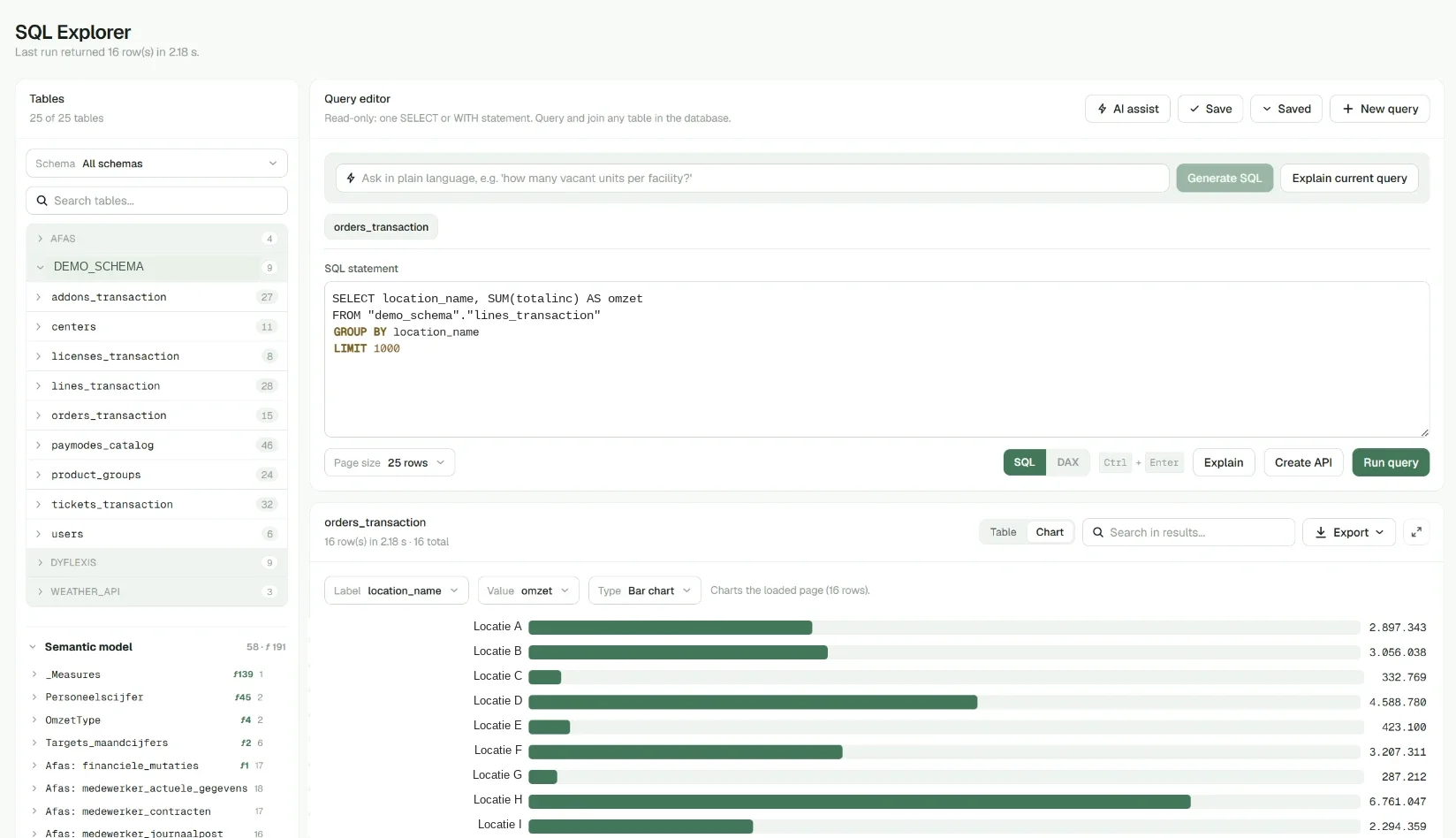
When combining sources, also check how they relate to each other. A CRM customer is not always a one-to-one match with a debtor in the finance system. Data Analytics supports connecting and structuring data in ENABLE and helps you determine what context the intended questions require.
03
Make an answer verifiable
During setup, agree what supporting information an answer needs. Consider the sources used, reporting period, filters and definition applied. A figure without this context may sound convincing while answering a different question. The user must be able to assess whether the result fits the intended use.
Check important answers against a known report or a targeted sample. Look beyond totals to missing records and exceptions. A plausible explanation is no substitute for this check. For decisions with greater consequences, agree in advance who will review the substance of the result.
04
Recognise when information is insufficient
Not every question has a supportable answer in your available data. A revenue decline may be visible without its cause being recorded. Set up usage so missing information leads to a limitation or follow-up question, rather than an invented explanation presented as fact.
Example: sales figures show that fewer units of a product were sold, but no data is available on stock shortages or campaign changes. An appropriate conclusion then stays within the observed trend. Possible causes can be discussed as hypotheses, clearly separated from what the data actually supports.
05
Start with a clear scope and choose where processing occurs
For an initial application, choose a limited set of questions, such as changes in monthly costs. This lets you assess data, definitions and answer checks in a focused way. This page describes possibilities and considerations; it is not a working chat with access to your records. A specific application requires separate scoping and setup.
Also determine which users receive access and which model suits the data. A local LLM differs from external AI receiving context through MCP; external processing depends on your choice and setup. Data Analytics supports setup and management, including agreements on evaluation and expansion.
Frequently asked questions
Can you ask questions about your own figures here directly?
No. This page is informational and has no access to your business data. Using your own figures requires agreements on sources, access rights, definitions, model choice and the setup of a specific application.
Can AI explain why a figure changes?
Only to the extent that available data and context support an explanation. Calculating a difference is not the same as establishing a cause. If relevant information is missing, that must remain clear when assessing the answer.
Does chat replace your existing dashboards?
Not automatically. Dashboards provide a fixed structure for recurring management information; chat can help with focused follow-up questions. Both need aligned definitions, or they may produce different answers to essentially the same question.
What is a suitable first topic?
Choose a recurring question with available data and a recognisable source for verification. A monthly cost comparison is often easier to scope than a broad question about every cause of changing business results.
Discuss your question with Data Analytics
Which sources, users and checks does your application need? Discuss your question in an ENABLE demo.
Meet our team